
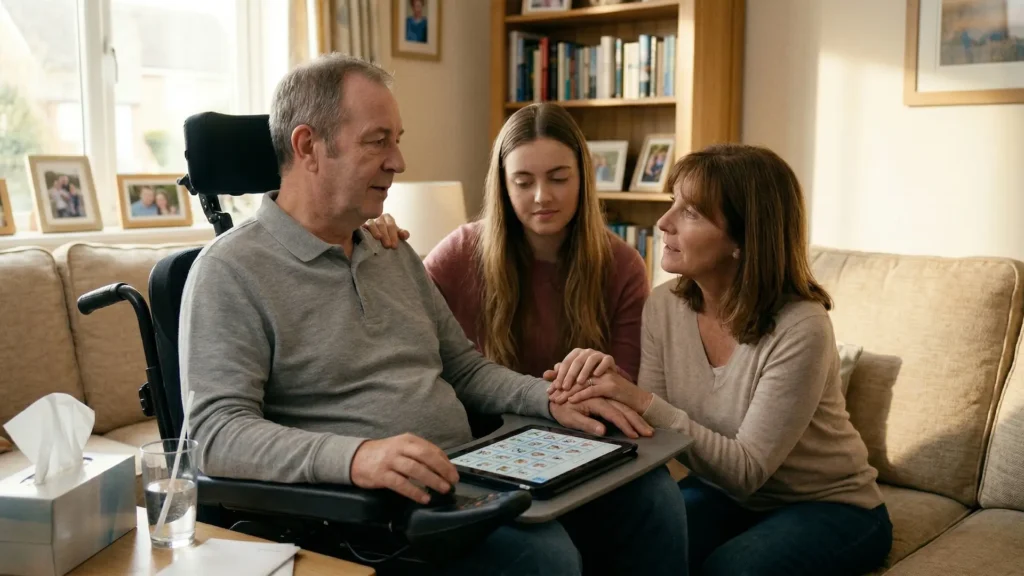
A diagnosis of motor neurone disease (MND) is life-changing for both individuals and their families. As a progressive degenerative condition, it affects movement, making everyday tasks like walking, speaking and swallowing increasingly difficult.
For families, supporting someone with motor neurone disease can be physically and emotionally demanding, particularly as needs change.
This blog explores the challenges families may face and offers practical ways loved ones can provide meaningful, day-to-day support alongside professional care when needed.
Understanding motor neurone disease & its impact
Let’s first examine what motor neurone disease is and how it impacts someone’s life.
What is MND?
Motor neurone disease is a condition that affects the motor neurons i.e. the nerve cells that send signals from the brain and spinal cord to the muscles. As these neurons gradually cease to function, the muscles weaken and waste away over time.
The progression of MND varies from person to person, but symptoms often include muscle weakness, difficulty speaking, mobility problems and challenges with swallowing or breathing. Because the condition affects multiple aspects of daily life, people living with MND often require increasing levels of support as the illness progresses.
Why does MND often require complex care?
Unlike conditions that affect just one area of health, MND can impact mobility, communication, nutrition and respiratory function.
Complex care is required for advanced health conditions, such as MND, that require ongoing clinical oversight and interventions. It is specialist, nurse-led care and involves clinical tasks usually provided in hospital or nursing settings, such as PEG tube care and ventilation care.
What are some practical ways families can support someone living with MND?
Every situation is unique, but below we share some simple and meaningful ways that families can provide support at home and ensure life continues to feel as normal as possible for your loved one.
Supporting daily activities while encouraging independence
One of the most important aspects of care is finding the right balance between helping and encouraging independence. Allowing your loved one to do what they can, at their own pace, helps maintain confidence and a degree of autonomy.
You can support them with everyday tasks such as dressing and preparing meals. However, where possible, encourage your loved one to do things for themselves, just ensure you give them extra time to complete these tasks.
Doing this really does make a big difference and will leave your loved one feeling empowered.
Helping manage fatigue & energy levels
Fatigue is common for those living with MND, with many people becoming exhausted even after the simplest of tasks. Families can help by encouraging their loved ones to go easy and take regular breaks.
Work with their energy levels, not against them. Notice when your loved one is more active, and their energy levels are higher, and plan activities and tasks for them during these windows.
Staying active where possible
Going for short walks outdoors with your loved one or encouraging them to incorporate daily stretching is important as unused muscles become even weaker.
However, be sure to tailor this sort of activity to the severity of your loved one’s condition. Often, this is a good thing to do with those in the earlier stages of an MND diagnosis.
Creating a safe & comfortable home environment
Making small adjustments at home can improve safety and ease as someone’s condition deteriorates. For example, employing the use of mobility aids, supportive seating or rearranging furniture to create clear pathways.
Another good tip is to ensure that frequently used items are within easy reach. These sorts of adaptations allow your loved one to remain as comfortable and independent as possible within their own home.
Supporting emotional wellbeing
Living with MND can feel lonely, so emotional support is just as important as physical support for your loved one. Ensure you are spending quality time together and show empathy and consideration whenever needed.
Helping with meals & nutrition
As MND progresses, it can affect someone’s ability to swallow. You can support your loved one by preparing softer or blended foods, offering smaller and more frequent meals and ensuring there is plenty of time for the meal, so they don’t feel hurried.
Good nutrition is vital, and these adaptations help to ensure eating is both enjoyable and safe.
Keep their mind active
To keep spirits up and provide a healthy distraction, find ways to keep your loved one engaged mentally, such as playing board games, solving puzzles or reading.
How should you talk to someone with MND?
A regular question we get asked is how to communicate with someone with MND, particularly as their condition deteriorates. Below, we’ve provided the advice our carers give.
Communicating with empathy & patience
Communication can become more challenging as MND progresses, particularly if speech is affected. Taking time to listen patiently and allowing the person space to express themselves is incredibly important.
Simple adjustments, such as speaking clearly, maintaining eye contact and avoiding interruptions, can help a person feel included, respected and heard.
Adapting communication as needs change
Understanding how to talk to someone with motor neurone disease often means adapting to new ways of communicating. Tools such as communication boards and text-based devices, among other solutions, can become helpful as the condition progresses.
When might you need professional support for someone with MND?
While families can provide an excellent level of care, there may come a point where additional support is needed.
As care becomes more complex, professional carers can help with more advanced personal care such as catheter and stoma care management, and they are qualified to manage specialist equipment, including ventilators or PEG feeding tubes.
This provides families with the chance to take some much-needed rest in the knowledge that their loved one is being properly taken care of.
At Hamill Homecare, we work alongside families to provide complex care at home for people living with MND and other conditions such as Multiple Sclerosis and Parkinson’s. This care is compassionate and tailored to each individual.
Family care isn’t replaced but supported, helping ensure both the individual and their loved ones are taken care of.
If you have any specific questions about what we do at Hamill Homecare or if you are seeking care for a loved one, please get in touch with our team to have a chat about how we can help.