

Whether you’re looking into care for yourself or a loved one, knowing where to start can feel daunting. Sometimes the need for care comes after a fall or diagnosis, while for others, it becomes apparent over time as everyday tasks become harder to manage independently.
Many people assume a care home is their only option. In reality, there are a range of care providers across Scotland that can help provide at home care to people from the comfort of their own homes.
Due to different circumstances, preferences and levels of independence, there isn’t a one-size-fits-all approach when it comes to care. Instead, it’s a deeply personal decision.
This blog will examine the pros and cons of choosing a care home versus opting for home care and will provide you with the tools to make the decision that best suits your loved one and wider family.
What is the difference between a care home and home care?
Below, we will go into more detail in relation to the differences between a care home and home care.
Location and familiarity
Moving into a care home means adapting to a new environment, with new surroundings, routines and people.
Meanwhile, with care at home, you remain in the comfort of your own home, surrounded by the belongings, memories and familiar surroundings you know and love.
Independence and choice
Care homes provide structure and support within a shared living environment, with routines and activities designed around the needs of residents.
However, you can maintain greater control over your daily routine when you have care at home, from when you get up and what you eat to how you spend your time.
Personalised support
Within a care home, care is provided in a shared setting, with staff supporting multiple residents according to their individual care plans and needs.
Whereas home care delivers targeted care to the individual, allowing support to fit around their existing routines, preferences and environment.
Social interaction
Living in a care home can provide opportunities to socialise with other residents and take part in organised activities and events, reducing feelings of loneliness and isolation.
With care at home, you can continue spending time with family and friends at your leisure, while staying connected to your local community.
Cost
The cost of care homes in the UK can vary depending on the type of care home, location and level of care required. Fees will typically cover a wider package of support, which can include accommodation, meals and care.
Home care costs are generally based on the care and support someone receives, with the amount varying depending on their individual needs and the number of hours of care required.
Cost can be an important factor when choosing care, so it’s worth looking at the options available and understanding what you can afford. It’s also worth exploring whether you or your loved one may be eligible for funding through your local Council to contribute towards the cost of care.
For example, if eligible, Self-Directed Support (SDS) Option 2 means you’re given an assessed budget from the Council, and you can choose the care company you wish to go with. The Council pays the allocated budget directly to the provider, and you pay any top-up costs.
The benefits of home care
There are several benefits to home care, and understanding the benefits can help you decide whether it is right for you or your loved one.
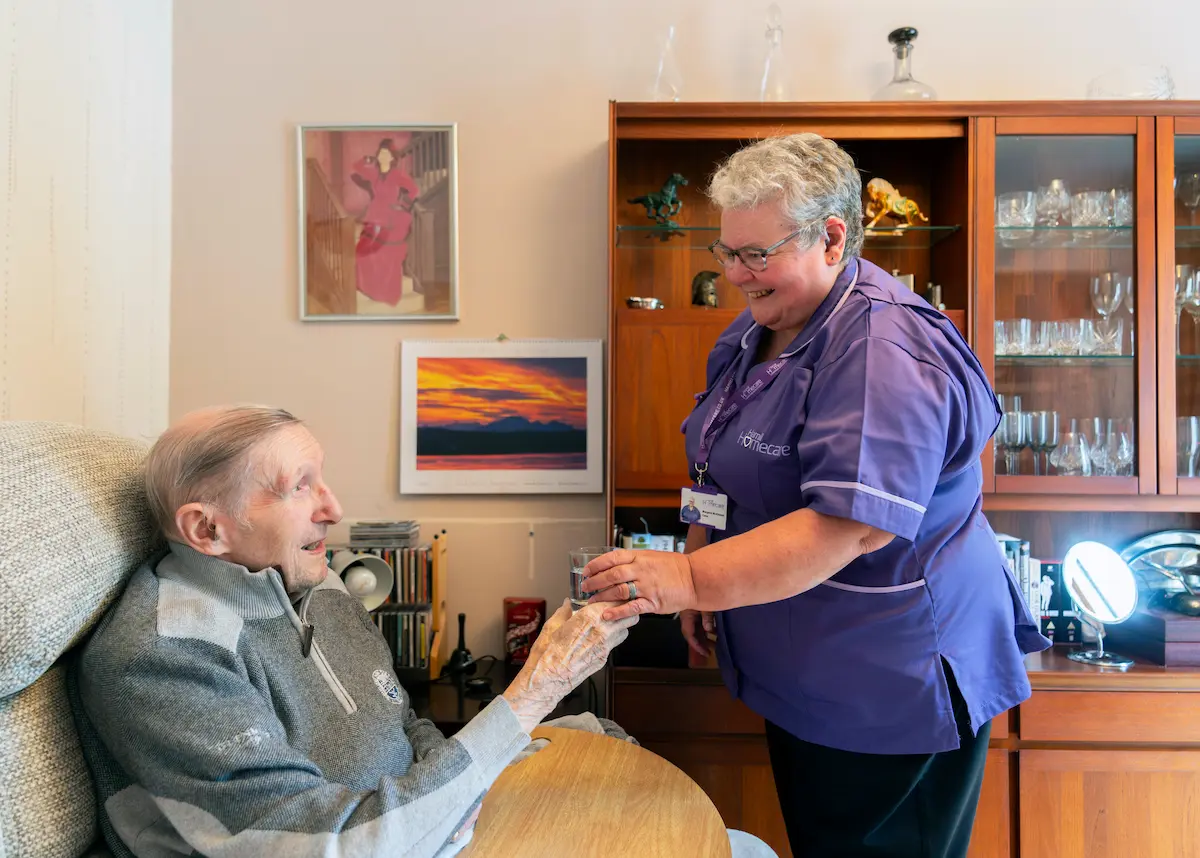
Home care allows individuals to stay in their home, maintain their independence, keep their routines and continue to make their own choices about their day. They can also continue to see the people they know, visit familiar places and take part in activities important to them, with additional support where needed.
Having a regular carer or care team allows the individual to get to know the people supporting them, build relationships and receive care from people who understand their needs and preferences.
What does home care actually look like?
If you’ve never experienced home care before, it can be difficult to know what a typical visit might look like. The reality is that no two visits are the same.
A carer or care team arrives at the agreed time and provides the support the individual needs: whether that’s helping them get ready, preparing a meal, supporting medication routines, accompanying them to an appointment or simply sitting down for a cup of tea and a chat.
Time to provide support without feeling rushed
At Hamill Homecare, visits are a minimum of 45 minutes, giving carers the time to provide support without feeling rushed. Each individual has a bespoke care plan that outlines the support they need, which their care team follows and adapts as their needs change.
Specialist care for complex needs
For those with more complex care needs, Hamill Homecare provides specialist, nurse-led complex care for individuals with long-term health conditions including Motor Neurone Disease, Muscular Dystrophy, Parkinson’s Disease and spinal cord injury, to name a few.
Respite support for caregivers
Home care can also include respite support, providing a primary care giver a much needed break from caring responsibilities, allowing them the chance to get out and about, safe in the knowledge that their loved one is being well looked after.
Care that fits around the person
Ultimately, care should fit around the person, rather than asking the person to fit around the care. At Hamill Homecare, each individual has their own tailored care plan depending on their needs, preferences and routine, allowing them to get the support they require while continuing to live life in the way they’re used to.
Questions to ask yourself when choosing between home care and a care home
Choosing the right type of care is a personal decision, and what works for one person may not be right for another.
If you’re considering home care or a care home, it can help to take a step back and think about what matters most to the individual and their family.
Some questions to consider include:
- What level of care does the person actually need?
- How much independence do they want to maintain?
- Are they comfortable with the idea of moving out of their home?
- Would they benefit from remaining close to family, friends and their local community?
- Could their care needs be safely met at home?
- How much flexibility does their care need to offer?
- What happens if their needs change over time?
- What kind of relationship do they want with their care provider?
Conclusion
Choosing care isn’t always as simple as deciding between a care home and home care. It’s about finding the right balance of care in the right environment, where someone can feel safe, supported, comfortable and respected, while continuing to live their life in a way that feels right for them.
At Hamill Homecare, we exist to bring a higher standard of care into people’s homes, providing support that is personal, reliable and delivered with dignity and respect. We have one mission: to help people live safely, comfortably and independently in their own homes for as long as possible.
If you have any specific questions about what we do at Hamill Homecare or if you are seeking care for you or a loved one, we’d be happy to talk through your needs and explain more about our approach to home care. Please get in touch with our team to have a chat about how we can help.